
Posted on

The field of education is constantly evolving. Classrooms are changing, student needs are becoming more diverse, and the work of educators continues to expand in important ways. For teachers who want to grow, lead, and make an even greater impact, continuing education isn’t just beneficial, it’s a powerful investment in their future.
Whether through a Master of Education (M.Ed.) degree, an endorsement, or a specialized certificate, advanced credentials help educators strengthen their skills, expand career opportunities, and increase their long-term professional security.
They Open Doors to Career Advancement
Many leadership and specialized roles in education require more than an initial teaching license. An M.Ed. degree, endorsement, or certificate can qualify educators for positions such as:
- Instructional coach
- Curriculum or instructional leader
- Reading or special education specialist
- Administrative pathways (with additional licensure)
- Avenue for teaching at the college level
Even when not required, advanced credentials make educators stronger candidates for promotions and leadership responsibilities within their schools and districts. They signal commitment, expertise, and readiness to take on greater influence.
They Increase Earning Potential
In many districts, salary schedules reward teachers for earning advanced degrees, endorsements, or graduate credits. Over time, these increases can significantly outpace the cost of the program itself. In this way, continuing education becomes more than professional development — it becomes a long-term financial investment with measurable return, especially from a program like Northwestern’s where the tuition costs are among the most affordable in the region.
They Build Specialized Skills Schools Need
Today’s classrooms are more diverse than ever, and schools are looking for educators with targeted expertise. Endorsements and certificates allow teachers to develop skills in high-need areas. These focused credentials don’t just strengthen a résumé; they equip educators with practical tools they can apply immediately to better serve their students.
They Provide Greater Job Security
School systems consistently need educators who can wear multiple hats. Teachers with additional endorsements or advanced degrees often have more flexibility in the roles they can fill, making them invaluable to their districts. This versatility can lead to:
- More stable employment
- Broader teaching assignments
- Increased resilience during staffing or enrollment shifts
In a changing educational landscape, adaptability is a major asset.
They Strengthen Confidence and Classroom Impact
Beyond titles and pay scales, many educators pursue advanced education for a simpler reason: they want to be better at what they do. Graduate coursework and specialized training help educators:
- Deepen their understanding of how students learn
- Use data more effectively
- Implement evidence-based instructional strategies
- Support students with diverse academic and social-emotional needs
The result is often renewed confidence, stronger classroom outcomes, and a deeper sense of purpose in their work.
They Fit Into the Lives of Working Educators
Northwestern’s M.Ed. programs, endorsements, and certificates are designed with working professionals in mind. Flexible, 100% asynchronous make it possible to continue teaching full-time while earning a new credential. This means educators don’t have to pause their careers to move them forward.
An Investment That Pays Off in More Ways Than One
Pursuing an M.Ed., endorsement, or certificate is about more than adding letters after your name. It’s about growth, as an educator, a leader, and an advocate for students.
For educators who want to expand their opportunities, strengthen their impact, and build a more secure future in education, advanced credentials are one of the most valuable steps they can take.
Ready to explore your next step in education? Learn how our graduate education programs, endorsements, and certificates are designed to support working educators and help you reach your professional goals. View programs here.
Posted on
Each year on Veterans Day, we pause to honor the men and women who have served our country with courage, sacrifice, and dedication. As a Physician Assistant program, this day holds special meaning. The PA profession itself was born out of the military, shaped by the service and experience of medics and corpsmen who cared for soldiers in some of the most challenging conditions imaginable.
How It All Began
In the years following World War II and the Vietnam War, thousands of military medics returned home with extensive medical training and hands-on experience treating patients in the field. Yet, despite their advanced skills, few opportunities existed for them to continue using those abilities in civilian healthcare.
Dr. Eugene Stead Jr. of Duke University recognized this gap. In 1965, he launched the first Physician Assistant program, training four former Navy corpsmen to extend the reach of physicians and improve access to care. These veterans became the first PAs, pioneering a new profession rooted in service, teamwork, and adaptability.
A Legacy of Service
That same spirit continues to define the PA profession today. Whether serving in the military or in various settings across America, PAs are known for stepping into places of need. The profession’s foundation in the military has shaped its emphasis on collaboration, flexibility, and mission-driven care—values that align closely with our calling here at Northwestern College.
Our program exists to equip PAs who serve patients in rural and underserved communities, demonstrating the same selflessness and commitment that characterized those early military medics. We believe healthcare is an opportunity to bring hope and healing to others, just as those first PAs did decades ago.
Honoring Those Who Serve
This Veterans Day, we not only thank those who have worn the uniform but also recognize how their service continues to shape medicine today. Many veterans choose to continue their mission of care through the PA profession, carrying forward a legacy that continues to impact and serve.
To all who have served—thank you. Your dedication has not only protected our freedom but also helped build a profession that embodies compassion, courage, and service.
Posted on
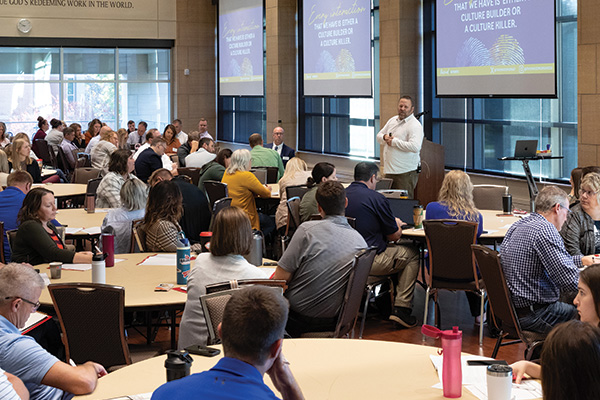
What to Expect
On Tuesday, October 21, 2025, Northwestern College’s Graduate & Professional Studies Division is proud to host the annual Leadership in Education Conference, themed Rooted in Culture, Rising in Success. This full-day professional development event (8:20 a.m. – 3:45 p.m.) brings together K–12 leaders, administrators, instructional coaches, and teacher leaders for a day of inspiration, strategy, and networking.
Why This Conference Matters Now
The educational landscape is changing quickly. From the growing importance of school culture to the rise of AI, data use, inclusive practices, and crisis leadership, leaders need more than theory, they need practical strategies grounded in real challenges. This conference is designed to bridge that gap.
By focusing on culture, behavior systems, AI and data, and leadership in adversity, the conference offers a well-rounded set of sessions that help you lead in today’s context while equipping you for tomorrow.
Featured Speakers & Sessions
Keynote: The Power of a Positive Culture — Dr. Jared Smith
Dr. Smith, Superintendent of Waterloo Community Schools, will open with a dynamic talk about how a strong culture underpins successful organizations. You’ll leave with concrete ideas for reinforcing a positive climate in your school or district.
He also leads two breakout sessions:
- Culture-Building for Leaders: strategies for administrators to model and sustain culture
- Culture-Building for All: how every staff member can contribute to a culture of respect and collaboration
More breakout sessions you won’t want to miss:
- Positive Approach to Student Success (PASS): Terry Hemann & Jackie Christensen present a behavior support model that integrates individualized instruction and data-driven coaching.
- Reaching All Students: Universal Design for Learning (UDL): Dr. Heather Hayes and Ashley Stanislav focus on inclusive strategies that meet the full range of learners.
- Administrative Uses of AI–Maximizing the Power of Data: Sandy Groom-Meeks will dive into how AI tools can support decision making, pattern recognition, and freeing leaders from data overload.
- Shared Instructional Leadership: Lessons from Experience: Jill Hulshoff and Chelsey Kurtzleben will share stories and mindsets behind distributed leadership in schools
- Artificial Intelligence in the Classroom–The Next Chapter: Practical use of AI in instruction, assessments, student support, and ethical considerations.
- Leadership Lessons Learned in a Trying Year: District leaders from Rock Valley (Matt Van Voorst, Noah DeYager, Nicole Roder) will reflect on crisis leadership following severe flooding and what it taught them about resilience, adaptability, and community.
- Closing Session: Creating a Culture of Excellence: Matt McCarty (Northwestern’s head football coach) will tie together themes of leadership, culture, and sustainable success.
What You’ll Walk Away With
- Actionable strategies you can apply immediately in your school or district
- Stronger understanding of how to harness culture as a lever for improvement
- Fresh perspectives on AI, data, and inclusive practices
- Insight into leading under pressure and in uncertain times
- Networking with fellow leaders, sharing challenges, ideas, and encouragement
Who Should Attend
This conference is ideal for:
- Building-level administrators (principals, assistant principals)
- District leaders and curriculum directors
- Instructional coaches or leaders responsible for culture or professional learning
- Aspiring administrators or teacher leaders looking to expand their leadership capacity
Logistics & Registration Reminder
Don’t forget: Registration closes October 15. Be sure to explore add-on credit options (license renewal, graduate credit, or micro-credential) when you register.
If you have questions, you can reach out to the Graduate & Professional Studies office at [email protected] or 712-707-7388.
Posted on

Beyond the Scoreboard: Why the Sports Industry Needs Purpose-Driven Leaders
How Business Strategy and Values Can Help You Stand Out in Sports Management
In the world of sports, performance is only one part of the story. Behind every game, every team, and every event is a network of strategic decisions, business operations, and leadership moments that define success, not just on the field, but off it.
From youth leagues to professional franchises, today’s sports industry demands leaders who understand both the business of sports and the values that shape its culture.
Because in sports management, the real wins come from strong leadership, ethical decision-making, and a vision that extends beyond the scoreboard.
Sports managers play a critical role across multiple domains:
- Overseeing athletic programs and facilities
- Managing sponsorships, partnerships, and fundraising
- Planning large-scale events with financial accountability
- Navigating legal and ethical challenges in a highly visible space
- Leading diverse teams under pressure and in public view
Success in this field requires more than a love of sports. It requires strategic thinking, business literacy, and the ability to lead with integrity in fast-paced, high-profile environments.
The Industry is Evolving and So Must its Leaders
As the sports world becomes more commercialized, digitized, and global, it’s also becoming more complex. Executives must manage multimillion-dollar budgets, respond to crises in real-time, and address increasingly important issues like mental health, equity, and athlete advocacy.
At the same time, fans, athletes, and communities are looking for leaders who care not only about outcomes—but about people. That’s why today’s sports leaders must combine business savvy with a strong sense of purpose. They must be able to Stand Out by leading in a way that’s not just successful, but meaningful.
At Northwestern College, our MBA specialization in Sports Management is designed to prepare students for leadership across the wide spectrum of athletics and recreation industries—all within a Christian academic community that encourages ethical, service-oriented leadership.
Students in the program explore topics such as:
- Sports marketing and sponsorship strategy
- Event and facility management
- Legal and ethical issues in sport
- Financial and operational planning
- Leadership communication and team culture
Guided by faculty with real-world experience, students apply their learning through case studies and projects that mirror the challenges faced by sports professionals today. Whether you're aiming to direct a college athletic department, manage a sports nonprofit, or lead operations for a professional team, this program equips you to lead with purpose, inspire with vision, and compete with integrity. Because in sports, as in life, the most impactful leaders are those who combine their passion with their principles.
Posted on

Why the Future of Healthcare Needs Empathetic Strategists
In healthcare today, leadership isn’t just about systems and efficiency, it’s about people. Every metric, policy, and strategic decision ultimately touches a human life. That’s why the best healthcare administrators aren’t just analysts or planners. They’re empathetic problem-solvers.
In an era defined by rising costs, evolving technologies, and deep disparities in access, we need leaders who can hold two ideas at once: that healthcare is a system, and that it must serve individuals with dignity and care.
Healthcare Leadership Demands More Than Management
Many assume that healthcare administration is primarily operational: scheduling, budgets, logistics. In reality, today’s healthcare leaders must think more broadly and more boldly. They’re being asked to weigh in on questions like:
- What services should our community hospital prioritize, given limited resources?
- How do we measure the value of a new treatment—not just in dollars, but in patient outcomes?
- Which policies will support both population health and equitable care access?
These are high-stakes, high-impact decisions. And they require not just strategic thinking, but ethical clarity and empathy. Because behind every spreadsheet or service line is a patient, a caregiver, a community.
The New Skill Set for Healthcare Administrators
The modern healthcare leader needs a rare blend of competencies:
- Data literacy to evaluate health outcomes, reimbursement models, and utilization trends.
- Policy fluency to interpret regulations and advocate for systems-level change.
- Communication skills to lead interdisciplinary teams, engage stakeholders, and build trust.
- Empathy to understand the human consequences of every decision.
This intersection of compassion and complexity is where the most meaningful change happens and where the next generation of leaders will make their mark.
A Program Built for Change-Makers
At Northwestern College, our MBA in Healthcare Administration is designed for professionals who want to drive both innovation and compassion to stand out in one of the world’s most vital industries. Students explore the full spectrum of healthcare leadership, from ethical frameworks and strategic planning to health policy and financial management. More importantly, they’re challenged to think deeply about the “why” behind the work: Who are we serving? What impact are we making? How can we lead with both insight and empathy? Because shaping the future of care requires more than managing systems. It requires leaders who see the person behind every policy and act accordingly. Learn more here.
Posted on

Why Today’s Finance Professionals Need More Than Technical Skill
For decades, the definition of a strong financial leader was clear: technical precision, risk awareness, and a sharp eye for numbers. But in today’s fast-moving business environment, that’s only part of the equation.
True financial leadership now requires range. The ability to see the big picture and the fine print, to interpret markets and understand people, to manage uncertainty while recognizing opportunity is vital because finance isn’t just about tracking value. It’s about understanding how value is created, sustained, and sometimes disrupted.
Beyond the Balance Sheet
At its core, finance teaches systems thinking: how companies grow, how capital is allocated, how markets respond. But the best financial leaders don’t stop there. They’re curious about the dynamics of change: how new technologies shift valuation models, how customer behavior impacts long-term strategy, and how a global crisis can redefine risk in an instant.
They also know that the answers don’t always live in the numbers alone. Judgment, context, and communication are just as critical, especially when it’s time to turn analysis into action.
The Skill Set Behind the Seat at the Table
Financial leaders increasingly serve as strategic advisors to the C-suite. They’re called on to evaluate emerging investments, frame risk in boardrooms, and deliver insight with clarity and conviction. That demands a blend of:
- Technical fluency in capital markets and corporate finance
- Strategic understanding of innovation, disruption, and valuation
- The communication skills to guide tough, high-stakes conversations
This combination of skills is what transforms a capable analyst into a trusted leader.
Preparing for the Financial Leadership Roles of Tomorrow
In a world defined by rapid change and complexity, businesses don’t just need people who can manage budgets, they need professionals who can interpret change, navigate volatility, and make decisions with broad impact.
At Northwestern College, our MBA specialization in Finance is designed to develop that kind of standout leader. Through a Christian world-view, students explore real-world case studies, hands-on analysis, and guidance from seasoned faculty. They examine how companies respond to disruption, how innovation reshapes industries, and how financial insight drives strategic outcomes. It’s a program that turns curiosity into informed judgment, the kind of judgment executive teams rely on when it matters most. Learn more here.
Posted on

If you’ve ever dreamed of making a lasting impact in the lives of young children, but your career path led you elsewhere, it’s not too late to pivot. Whether you’re coming from the corporate world, healthcare, social work, or other fields, the demand for skilled early childhood educators has never been higher.
Northwestern College’s online Master of Arts in Teaching (M.A.T.) in Early Childhood Education is designed specifically for career changers who already hold a bachelor’s degree but are not yet licensed to teach. This flexible, fully accredited program offers a direct route to licensure and equips you with the tools to support and educate children from birth through third grade.
In this article, we’ll explore the key benefits of pursuing this degree, from licensure and flexibility to career outcomes and the deep personal fulfillment that comes with shaping the early years of a child’s development.
Transition into Teaching with Confidence
Career changers without a teaching license can seamlessly step into education through Northwestern’s M.A.T. program. It leads to a birth through grade 3 inclusive teaching license, including special education endorsement, enabling graduates to teach students with and without IEPs. This comprehensive licensure bundle is rarely offered outside traditional education pathways.
Fully Online & Flexible Format
With 100% online, asynchronous courses, you maintain your current job and schedule. Classes start every 8 weeks, letting you take just one course at a time and complete the 33–44 credit program in around two years.
Affordable & Financially Supported
Northwestern offers a competitively priced program with additional financial incentives including:
- TEACH Grant eligibility for those pursuing high-need roles
- Alumni Grant providing the first class tuition-free to NWC alumni
Grounded in Research & Best Practices
The program’s curriculum is built on proven early childhood education research:
- Technology teaching and learning strategies support students to effectively use technology in classrooms to enhance learning, engagement, and communication
- Focused child development courses equip you to support typical and atypical growth in cognitive, emotional, and physical domains
- Literacy strategies emphasize early reading and language acquisition essentials
Practical, Workforce-Ready Training
Beyond theory, the M.A.T. includes a student teaching block (4–14 credits, based on previous field experience) that provides real classroom experience under guidance. Graduates are ready to step into roles as licensed teachers on day one.
Meet a Nationwide Demand
There’s increasing demand and improved state support for early childhood educators. Iowa recently raised teacher salaries, demonstrating growing investment in quality education. Graduates enter the field with credentials aligned to both licensure requirements and community needs.
A Supportive Christian Academic Community
Northwestern College is an accredited institution rooted in Christian values, with strong faculty mentorship and flexible scheduling tailored for adult learners. The institutional focus on fostering close-knit interaction and personal growth alongside professional development is unmatched.
Final Thoughts
If you’ve ever felt a pull toward education, especially guiding young children during their formative years, Northwestern College’s online M.A.T. in Teaching in Early Childhood is your bridge to meaningful, impactful work. You’ll earn licensure, gain practical experience, and join a profession that both nurtures children’s futures and answers your call.
Ready to begin? Classes start every 8 weeks with rolling admissions and no GRE or application fee. Learn more here or contact your enrollment counselor here to start your next chapter.
Posted on

Why Cybersecurity Is Now a Core Leadership Responsibility
Cyber threats are no longer a technical issue, they’re a boardroom concern. Over the past year alone, reported data breaches increased by 20%, and according to a recent industry survey, 75% of cybersecurity professionals say the threat landscape is now the worst it’s been in five years.
This isn’t just a matter of firewalls and malware detection. It’s about business continuity, brand reputation, customer trust, and regulatory exposure. Cybersecurity has become a strategic risk, one that leaders can no longer delegate away.
When a Breach Happens, It's Not Just IT That Takes the Hit
In today's digital economy, trust is currency. A single breach can erode it overnight. Consumers expect their data to be protected. Stakeholders expect resilience. Regulators expect compliance. And when those expectations aren’t met, the fallout affects every corner of an organization from operations to legal to PR.
Yet only half of cybersecurity professionals believe their organization has the tools in place to respond effectively to a breach. This gap between rising threats and internal preparedness points to a deeper issue: cybersecurity isn’t just about the tools you have. It’s about the leadership you cultivate.
Cyber Risk Is Business Risk
Modern cyber threats, from ransomware and phishing to insider threats and nation-state attacks, don’t respect departmental boundaries. They impact entire ecosystems. That’s why executive leaders must understand:
- How cybersecurity aligns with overall enterprise risk management.
- The fundamentals of governance, compliance, and response frameworks.
- The ethical and legal dimensions of data use and digital defense.
- The business case for investing in cybersecurity, not just as a cost center, but as a value-preserving function.
Cybersecurity leaders are no longer just technologists. They’re educators, risk stewards, communicators, and strategic advisors.
From Awareness to Action: Building Resilient Organizations
Effective cybersecurity leadership requires a multidisciplinary mindset. Yes, it involves technical awareness—but more importantly, it demands strategic vision, ethical grounding, and organizational fluency. Leaders must be equipped to:
- Evaluate cybersecurity posture at the enterprise level.
- Communicate risk and resilience strategies to non-technical stakeholders.
- Foster a security-aware culture across all teams.
- Make informed decisions when, not if, an incident occurs.
These are leadership skills. And like all leadership skills, they can be taught, refined, and applied across industries.
Preparing Leaders to Face What’s Next
As the threat landscape becomes more complex, organizations need leaders who can meet the challenge head-on—not just with technical knowledge, but with the clarity and confidence to guide others through it.
At Northwestern College, our MBA specialization in Cybersecurity prepares professionals to stand out. Through a uniquely Christian perspective, students examine governance, risk management, compliance, and even ethical hacking principles, students learn how to lead resilient, security-conscious organizations in a high-stakes digital world. Learn more here.
Because the cost of a breach isn’t just data. It’s trust. And rebuilding that starts at the top.
Sources:
ISC2. (2023). Cybersecurity workforce study 2023. https://media.isc2.org/-/media/Project/ISC2/Main/Media/documents/research/ISC2_Cybersecurity_Workforce_Study_2023.pdf
Madnick, S. E. (2023, December). The continued threat to personal data: Key factors behind the 2023 increase (White paper). Apple. https://www.apple.com/newsroom/pdfs/The-Continued-Threat-to-Personal-Data-Key-Factors-Behind-the-2023-Increase.pdf
Posted on

In an age where nearly every action, transaction, and interaction generates data, you might expect that most organizations are thriving in a data-driven culture. But the reality tells a different story.
A 2024 survey of Fortune 1000 CIOs revealed that over 60% of companies still haven’t established a truly data-driven culture. Despite access to vast amounts of information, many businesses are struggling to translate raw data into meaningful decisions. It’s not for lack of dashboards or reports, it’s for lack of leadership that knows how to use them.
The Data Deluge Isn’t the Problem. The Disconnect Is.
Most organizations don’t need more data. They need better ways of understanding, communicating, and applying it. In high-performing businesses, data isn’t locked in a silo, it’s embedded in everyday decision-making. That’s not something software alone can solve. It requires a shift in how people lead, collaborate, and think.
Strategic leaders today must be able to:
- Ask the right questions of their data.
- Understand what their analytics tools can, and can’t, reveal.
- Translate insights across departments, from IT to marketing to operations.
- Balance intuition with information in decision-making.
Analytics Is a Leadership Skill
Business analytics is often misunderstood as a purely technical field, but its true power lies in its strategic use. The organizations exceeding their goals, 77% more likely to do so, according to the same 2024 survey, are those where leaders drive a culture of curiosity, accountability, and evidence-based thinking.
Being data-driven doesn’t mean replacing human judgment with algorithms. It means equipping decision-makers at every level with the literacy and confidence to work with data intelligently. And that only happens when leaders champion both analytics and communication.
Bridging the Gap Between Insight and Action
The gap between data and decisions is where many businesses stall. They may invest in tools but fail to build the internal capacity to use them well. That’s why the future of business analytics isn’t just technical, it’s transformational.
What today’s organizations need are professionals who:
- Understand how to model and interpret data.
- Can spot patterns others miss.
- Know how to build trust in analytics across teams.
- Can clearly communicate complex findings to drive action.
This combination of literacy and leadership is what turns analytics from a function into a force multiplier.
The Opportunity Ahead
As industries continue to digitize and automate, analytics is no longer a specialized corner of business, it’s at the center. But turning insight into advantage will depend on who’s interpreting the numbers, telling the story, and making the call. Because data doesn’t lead. People do.
That’s why more professionals are seeking advanced education that goes beyond technical training. At Northwestern College, our MBA in Business Analytics is designed for leaders who want to drive impact, not just through numbers, but through influence in a Christian Academic Community. The program equips students to understand data deeply, communicate insights clearly, and foster a culture where evidence-based decisions thrive. It’s an MBA for those who want to lead the change—across industries, across teams, and across the complex challenges ahead. Learn more here.
Sources:
Wavestone. (2024). 2024 Data & AI Executive Leadership Survey. Retrieved June 11, 2025 from https://www.wavestone.com/en/insight/data-ai-executive-leadership-survey-2024/.
Posted on

In a courtroom, every word counts. Legal interpreting is more than just translating; it’s the vital link that ensures justice is not lost in communication. As the U.S. population grows increasingly diverse, so does the demand for skilled interpreters who can uphold the integrity of our legal system while serving individuals with limited English proficiency.
Northwestern College’s Legal Interpreting Certificate equips bilingual professionals with the tools they need to thrive in this high-stakes, high-impact profession. Rooted in academic excellence and Christian values, this 15-credit online program prepares students to serve in courtrooms, law enforcement settings, legal offices, and beyond.
Designed for working adults, the program offers:
- Flexible online coursework taught by experienced practitioners
- Focused training in courtroom procedures, legal terminology, and ethics
- Preparation for the NCSC certification exams
- Supportive Christian academic community that champions both skill and service
For Spanish/English bilingual professionals, this program is more than a credential, it’s a calling. Legal interpreters don’t just interpret words; they ensure others are heard. Northwestern’s program makes this essential work accessible, affordable, and mission-driven.
Whether you're already working in interpretation or are ready to enter the legal field with purpose, our certificate provides the foundation to stand out and serve others.
Ready to make your voice, and theirs, count?
Explore Northwestern’s Legal Interpreting Certificate →
