
Posted on
 Why It’s an Exciting Time to Be a Physician Associate in Iowa: 3 Major Legislative Successes
It is an exciting time to be a practicing Physician Associate (PA), or training to become one, in the state of Iowa. Over the last several years, the Iowa Physician Associate Society (IPAS) has worked to champion legislation that allows PAs to utilize their education and training to meet Iowa’s evolving healthcare needs.
As licensed clinicians who practice in every specialty and clinical setting, PAs are important members of healthcare teams, providing high-quality, patient-centered care. Recent legislative changes in Iowa have modernized the profession in three significant ways, addressing administrative barriers and supporting access to care.
1. Title Change to Physician Associate
On July 1, 2026, Iowa’s legislation changing the professional title from Physician Assistant to Physician Associate took effect. Iowa law now recognizes “physician assistant,” “physician associate,” and “P.A.” as synonymous terms for the same licensed profession.
The title modernization reflects the education, clinical training and responsibilities of PAs within today’s healthcare teams. It also provides an opportunity to help patients and other healthcare professionals better understand the role PAs play in delivering medical care.
Importantly, the title change does not change a PA’s scope of practice, licensure requirements, certification requirements, prescribing authority, reimbursement eligibility or patient care responsibilities.
2. Joining the PA Licensure Compact
Iowa has also joined the PA Licensure Compact, an interstate agreement designed to streamline the process for eligible PAs to obtain authorization to practice in participating states.
Traditionally, PAs seeking to practice in multiple states may need to complete separate licensure processes through each state. The compact is designed to reduce that administrative burden and improve license portability, which can be especially useful for PAs who work across state lines or provide telemedicine services.
Iowa joined a growing group of states participating in the compact, including neighboring states such as Minnesota, South Dakota, North Dakota, Nebraska, Wisconsin and Kansas. As of August 2026, 29 states had enacted the compact.
The compact has been activated, but PAs cannot yet apply for compact privileges. The PA Compact Commission is continuing the work needed to fully operationalize the system, with applications expected to become available in 2027.
Once operational, the compact is expected to make it easier for eligible PAs to obtain authorization to practice in multiple member states, helping support workforce mobility and access to care.
3. Advancing Optimal Team Practice
Iowa is also moving toward Optimal Team Practice (OTP), a model focused on reducing unnecessary administrative barriers while supporting collaboration among PAs, physicians and other healthcare professionals.
According to the Iowa Physician Associate Society, OTP includes three key components: eliminating requirements for a specific relationship between a PA and another healthcare provider, establishing appropriate PA representation in professional regulation, and authorizing direct reimbursement for PAs by public and private payers.
For Iowa’s healthcare workforce, these changes can provide greater flexibility in how healthcare teams are structured while maintaining a collaborative, patient-centered approach to care. They may be particularly meaningful for rural and underserved communities where expanding access to qualified healthcare providers is an ongoing priority.
These changes do not mean PAs practice without collaboration or according to an unlimited scope of practice. A PA’s practice continues to be shaped by the laws and regulations of the state in which they practice, as well as their education, training and experience.
A Perspective From Northwestern’s PA Program
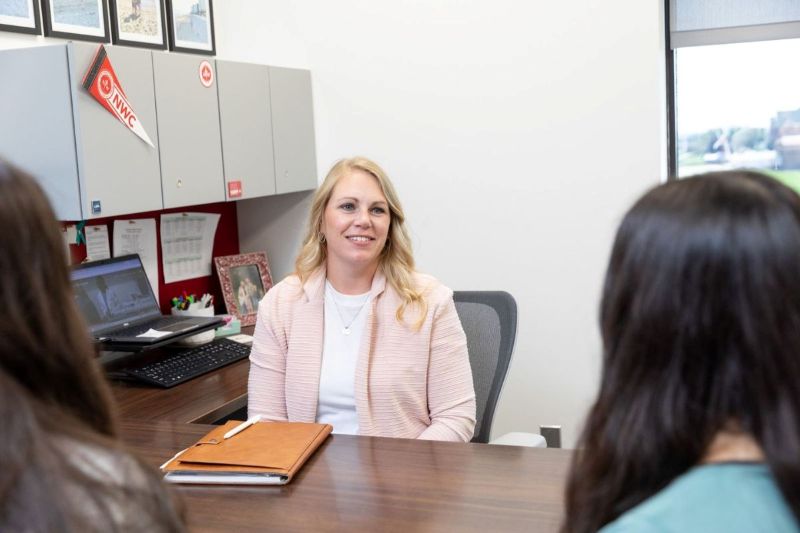
These changes are particularly meaningful to Jill Van Otterloo, program director of Northwestern College’s Master of Science in Physician Assistant Studies program.
Van Otterloo has served as program director since 2022, after previously serving as associate director and professor of practice for the program. She earned her B.S. in biology with a minor in psychology from Iowa State University and her Master of Science in Physician Assistant Studies from Des Moines University.
Before joining Northwestern, Van Otterloo practiced family medicine at Mercy Family Clinic in Forest City, Iowa and at Sioux Center Health. She now brings both her clinical experience and experience as an educator to her work with Northwestern’s PA students.
Her experience in both clinical practice and PA education gives her a firsthand perspective on how changes in Iowa’s healthcare landscape can affect both current practitioners and the next generation of PAs.
Alignment With the Mission of the Northwestern College PA Program
These legislative milestones closely align with the mission of the Northwestern College PA Program.
As Christian healthcare providers, Northwestern PA students are called to provide compassionate, empathetic and holistic care, tending to the physical, mental, social and spiritual needs of every patient.
Northwestern College is committed to preparing graduates to serve patients with excellence and integrity, with particular emphasis on rural and underserved communities.
As Iowa continues to modernize its PA practice environment, Northwestern graduates will enter a profession that is evolving to meet the healthcare needs of communities across the state.
For students considering a career as a Physician Associate, these changes provide an important look at the direction of the profession in Iowa—and the opportunities ahead.
There is an exciting future for Physician Associates in Iowa, and Northwestern College is preparing students to be part of it.
Resources
https://www.iapasociety.org/pa-compact
https://www.aapa.org/news-central/2026/04/iowa-marks-major-milestone-with-passage-of-title-change-legislation/
https://www.aapa.org/advocacy-central/pa-licensure-compact/
https://www.aapa.org/advocacy-central/pa-practice-modernization/
https://www.iapasociety.org/optimal-team-practice
Posted on
 Infectious Passion on Display at State History Day Contest
There’s nothing more rewarding than seeing kids excited about history.
This spring, I attended the State History Day competition in Ames, Iowa. As a judge, I had the privilege of hearing middle school and high school students share their passion for history. The judges talk with students about their projects in an interview style. Many students are a bit nervous, but it doesn’t take long to get them to share what interested them about their project. We heard about the history of Pacman and early arcade games, the introduction of premature baby incubators in circus exhibitions, vaccines, and relatively unknown black female civil rights lawyer in Iowa, Gertrude Rush. It was thrilling to hear the students talk about how to find good sources and do research. They always found information that surprised them. One student researched rivers on fire from pollution and it ignited her passion for the environment. The student told us that because of this research she and her friends wanted to spend more time learning about the environment and finding ways to make it safer and cleaner.
There can be a lot of handwringing about the school system in the United States with regard to teachers, students in this generation, and the role of technology. But for me, on a Monday in April, I was able to exult in the joy of seeing students pushed to research and present a topic on Revolution, Reaction, and Reform in US History.
Thank you to all the social studies teachers that cajoled, required, and pushed students to participate in History Day. And thank you to all the students who worked diligently to understand and topic and talk to an interested nerdy historian about it.
About Rebecca:
Rebecca Koerselman is the program director for the Teaching History graduate program and also teaches courses in the undergraduate program on US history, the atomic bomb and nuclear culture, sport in societies, the history of native peoples, the history of religion, the history of gender, public history, and methods of teaching social studies.
Posted on
What does it mean for a counseling program to be distinctly Christian while also preparing students for a profession shaped by broader cultural and professional conversations?
For us, the answer begins with our mission: we are a Christian academic community engaging students in courageous and faithful learning and living that empowers them to follow Christ and pursue God’s redeeming work in the world.
That mission has implications for how we approach counselor education. Christian faith integration is not simply the addition of Christian content to a professional curriculum, nor does Christian education require insulating students from ideas with which Christianity may disagree. Rather, it calls students to engage their disciplines thoughtfully and faithfully, considering both what they are learning and the assumptions that shape that knowledge.
Our CACREP accreditation is an important part of that approach.
Professional preparation within a Christian framework
The Council for Accreditation of Counseling and Related Educational Programs (CACREP) establishes standards for counselor preparation, including curriculum, clinical training, supervision, ethics, assessment, and professional development. External accreditation provides meaningful accountability for the quality of a counseling program, while also offering practical benefits to graduates. Depending on the state and employment setting, CACREP accreditation can affect licensure pathways, professional mobility, and employment opportunities.
For our students, that matters. Graduate education represents a significant investment, and we want our graduates to be well prepared for the profession they are entering and positioned to serve in a wide range of settings.
At the same time, CACREP does not define our program’s faith-based identity. CACREP is a professional accrediting organization, not a Christian institution, and its standards engage contemporary questions about culture, identity, diversity, social context, advocacy, and other areas that are prominent within the counseling profession. Some of the assumptions and frameworks encountered in these conversations merit careful examination from a Christian perspective. We believe our students are best served by engaging those questions rather than avoiding them.
A Christian counselor should understand the professional theories and perspectives that shape contemporary counseling. Students need to be able to engage clients whose experiences and beliefs differ from their own, understand professional literature, and practice competently within a diverse society. At the same time, they should have the theological and intellectual resources to evaluate the assumptions underlying what they encounter. That is an important dimension of faith integration.
Courageous and faithful learning
Christian higher education should give students the confidence to engage difficult ideas honestly. Scripture calls Christians to wisdom and discernment, including the testing of what they encounter rather than accepting or rejecting ideas simply because of where those ideas originate.
For counselor education, this means asking enduring questions about the human person: What is human flourishing? What constitutes dignity? How should we understand suffering, responsibility, relationships, identity, and justice? How do our beliefs about human nature shape the way we understand counseling and clinical care?
Professional accreditation cannot answer those theological questions, and it should not. Those questions belong to a larger intellectual and theological framework in which Scripture and Christian faith have an essential place.
Our aim is therefore not to prepare counselors who are unfamiliar with competing perspectives, nor counselors who simply conform to them. We seek to prepare counselors who can understand contemporary professional practice, think critically about its assumptions, and bring their convictions thoughtfully into their vocation.
Preparing students for the world they will enter
Our graduates will work in a profession that is increasingly complex and diverse. They will encounter clients, colleagues, theories, and institutions that do not always share their understanding of the human person. Preparing students for that reality requires more than technical competence; it requires intellectual maturity, theological grounding, clinical skill, humility, and discernment.
We believe those goals are consistent with both professional excellence and Christian faith.
CACREP accreditation strengthens our professional preparation. Our Christian mission provides the larger framework within which that preparation takes place. Together, they reflect our commitment to the kind of education described in our mission: courageous and faithful learning that prepares students to follow Christ and participate thoughtfully in God's redeeming work in the world.
For prospective students, we hope the important question is not simply whether a Christian counseling program is professionally accredited. It is also whether the program can prepare them to enter their profession with both competence and conviction—understanding the field they are entering while remaining grounded in the faith that shapes who they are and how they understand their calling.
That is the kind of counselor education we seek to provide.
